Patterns For Preschool: Building Foundations in Early Math
Patterns are the first step children take toward understanding mathematics, logic, and the world around them. In a preschool setting, pattern activities help develop visual discrimination, sequencing skills, and the ability to predict what comes next. This article explores why patterns matter, the most common preschool pattern types, and practical ideas you can use at home or in the classroom.
Why Introducing Patterns Early Is Important
Research shows that children who engage with patterns develop stronger problem‑solving abilities and are better prepared for later concepts such as addition, subtraction, and algebraic thinking. Pattern work supports:
- Fine‑motor development through sorting and arranging objects.
- Language growth as children describe sequences using words like “first,” “next,” and “again.”
- Concentration because recognizing a pattern requires sustained attention.
In this elementary math lesson, teachers often start with simple visual patterns and gradually increase complexity as confidence builds.
Common Preschool Pattern Types
AB (Alternating) Patterns
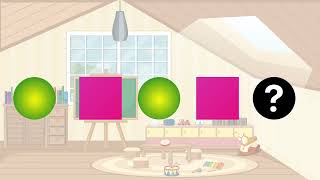
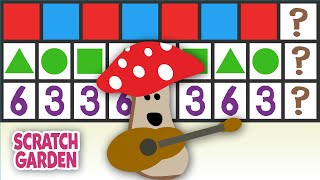
An AB pattern repeats two elements in a predictable order: red‑blue‑red‑blue. Children can create AB patterns using colored blocks, beads, or stickers. This is the most intuitive pattern for young learners.
AAB and ABB Patterns
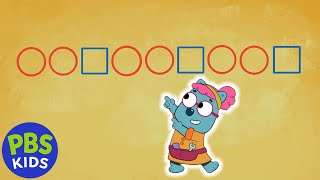
These involve three‑item groups. In an AAB pattern, the first two items are the same and the third is different (circle‑circle‑square). In an ABB pattern, the first item is different, followed by a pair of the same (triangle‑star‑star). Both patterns help children notice subtle changes in repetition.
ABC (Three‑Item) Patterns
ABC patterns introduce a longer cycle: green‑yellow‑purple‑green‑yellow‑purple. They encourage children to count ahead and remember the entire sequence before it repeats.
Hands‑On Activities for Preschoolers
- Pattern Blocks on a Mat: Lay out a colored mat and ask children to place blocks in an AB or AAB sequence. Ask, “What comes next?” to reinforce prediction.
- Sticker Sequencing: Use stickers from Moose Clumps to create patterns on a worksheet. This combines creativity with math practice.
- Clap and Count: Clap a rhythm that matches a visual pattern (e.g., clap‑clap‑pause). Children replicate the rhythm, linking auditory and visual sequencing.
- Nature Walk Patterns: