Understanding Pennies and Dimes
Introducing children to the value of money is a practical skill that builds mathematical thinking. Pennies and dimes are often the first coins young learners encounter, offering a hands-on way to explore counting, place value, and basic arithmetic. These coins help bridge concrete experiences with abstract concepts, making them a staple in early education.
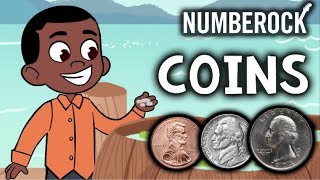
Pennies and dimes differ in appearance and worth. A penny is a copper-colored coin with a smooth edge, bearing the profile of Abraham Lincoln and the Lincoln Memorial. A dime, though smaller, is silver-colored with a ridged edge and features Franklin D. Roosevelt. Recognizing these differences is the first step in learning to count and combine them.
The Value of Each Coin
Before counting, children must understand what each coin represents. A penny is worth one cent, while a dime is worth ten cents. This ten-to-one relationship is crucial because it introduces a foundational place value concept: ten ones make one ten. When teaching, emphasize that a single dime has the same value as ten pennies. This comparison helps children see that larger coin denominations can simplify counting.
For example, if a child has 15 cents, they can represent it as one dime and five pennies (10 + 5) rather than fifteen individual pennies. This shift from counting by ones to counting by tens is a key milestone in mathematical development.
Counting with Confidence
Learning to count coins requires practice and strategy. Start with pennies alone, having children count by ones. Once they are comfortable, introduce dimes and teach counting by tens. Combining both coins involves switching between counting methods. Begin with the dimes, counting by tens, then add the pennies by ones.
For instance, if a child has three dimes and four pennies, they count: 10, 20, 30 (for the dimes), then 31, 32, 33, 34 (adding the pennies). This process reinforces the idea that dimes represent the tens place and pennies represent the ones place. Many 2nd grade teachers explore this strategy to build number sense. Additionally, explaining that counting combinations of