What Is a Printable Sword?
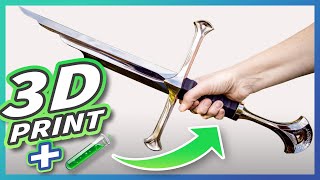
A printable sword is a 3‑dimensional model that can be fabricated on a desktop 3D printer. Designers create the blade, hilt, and pommel as separate STL files, allowing hobbyists to print each part in the material of their choice—PLA, PETG, ABS, or even flexible filament. Once printed, the pieces are assembled, sanded, and finished to resemble a real weapon without the cost or risk of forging metal.
Choosing the Right Design
Before you start, evaluate the intended use of your sword. If you plan to display it, a detailed high‑resolution model works best. For cosplay or stage combat, prioritize durability and balance. Many designers offer multiple versions of the same sword, such as a lightweight “prop” version and a heavier “battle‑ready” version. Look for files that include:
- Separate components for blade, guard, and grip
- Recommended print settings (layer height, infill, supports)
- Scale options to match your height or costume requirements
Downloading Printable Sword Files
If you want to make yours, you can reach the files from my shops via the link provided on my store page. The files are packaged in a zip folder that contains the STL files, a PDF assembly guide, and a list of recommended post‑processing steps. Always read the license terms—most files are for personal, non‑commercial use unless you purchase a commercial license.
Printing Tips for a Strong Blade
Printing a sword that holds up to handling requires careful attention to orientation and infill:
- Orientation: Print the blade lying flat on the build plate. This reduces the need for supports and improves layer adhesion along the length of the sword.
- Infill density: Use at least 40 % infill for a sturdy blade. If you have a printer that supports variable infill, increase density near the hilt where stress is greatest.
- Layer height: A 0.2 mm layer height balances surface quality and print time. For a smoother finish, you can print at 0.1 mm and sand later.
- Material choice: PETG offers a good mix of strength and flexibility, while ABS provides higher heat resistance. For a lightweight prop, PLA works well but may be more brittle.
Finishing Techniques: From Plastic to Metal‑Look
After printing, the raw plastic surface looks rough and bright. To transform it into a realistic sword, follow these steps:
- Sand the surface: Begin with 120‑grit sandpaper and progress to 400‑grit for a smooth finish.
- Apply a primer: A spray