Punnett Square Practice Worksheet With Answers
Unlock the power of genetics with a focused practice worksheet that includes all the answers you need to master Punnett squares. Whether you’re a high‑school student preparing for a quiz, a teacher looking for classroom resources, or a curious learner exploring heredity, this guide will help you understand how to use practice worksheets effectively and why they’re essential for learning complete dominance.
What Is a Punnett Square?
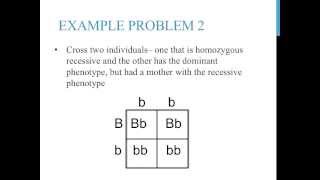
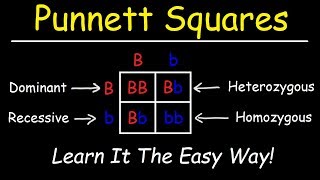
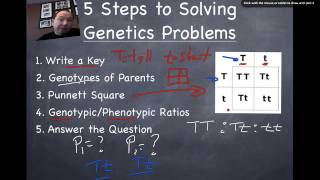
A Punnett square is a simple diagram that predicts the genotypes and phenotypes of offspring from a cross between two organisms. By lining up the alleles from each parent, you can see all possible genetic combinations in a clear, visual format. The basic steps are:
- Identify the alleles for each parent.
- Draw a grid with rows for one parent’s alleles and columns for the other’s.
- Fill in each cell with the allele combination.
- Interpret the results to determine genotype frequencies and phenotype ratios.
Why Use Practice Worksheets?
- Repetition builds confidence: The more crosses you work through, the easier it becomes to spot patterns.
- Immediate feedback: Worksheets with answers let you check your work right away.
- Varied difficulty: Start with simple single‑gene crosses and progress to multiple genes or incomplete dominance.
- Assessment tool: Teachers can use them to gauge student understanding before moving to more complex topics.
Example Practice Worksheet
Below is a sample worksheet that covers a classic Mendelian cross: the inheritance of flower color in pea plants (purple vs. white). The answers are provided after each question.
1. Cross: Purple (PP) × White (pp)
- Create a 2×2 Punnett square.
- What are the possible genotypes of the offspring?
- What is the expected phenotypic ratio?
Answer: All offspring will be heterozygous (Pp) and display the purple phenotype. Phenotypic ratio: 100% purple.
2. Cross: Heterozygous Purple (Pp) × Heterozygous Purple (Pp)
- Construct the Punnett square.
- List genotypic outcomes.
- Determine the phenotypic ratio.
Answer: Genotypes: 1 PP, 2 Pp, 1 pp. Phenotypic ratio: 3 purple : 1 white.
3. Cross: White (pp) × White (pp)
- Draw the grid.
- Identify the genotype of all progeny.
- State the phenotype.
Answer: