Science and Pseudoscience: Understanding the Difference
In a world saturated with information, distinguishing genuine scientific inquiry from pseudoscientific claims is essential. While science relies on systematic observation, testable hypotheses, and peer‑reviewed evidence, pseudoscience often masquerades as legitimate research but lacks rigorous methodology. This article explores the core characteristics of both, offers historical context, and provides practical tools for evaluating extraordinary claims.
The Foundations of Scientific Method
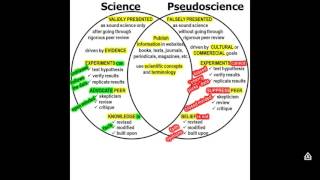
Science is built on a set of principles that guide researchers from question to conclusion. These principles include:
- Empiricism: Knowledge comes from observable, measurable phenomena.
- Falsifiability: A hypothesis must be capable of being proven false through experiment or observation.
- Reproducibility: Independent researchers should be able to replicate results using the same methods.
- Peer review: Findings are scrutinized by experts before publication, ensuring methodological soundness.
When these criteria are consistently applied, scientific knowledge advances in a cumulative, self‑correcting manner.
Common Features of Pseudoscience
Pseudoscientific ideas often share predictable patterns that betray their lack of legitimacy. Recognizing these patterns helps protect against misinformation.
1. Lack of Testable Predictions
Claims that cannot be measured or falsified—such as “the physical realm is a mental construct” without a clear experimental design—fall outside the realm of science.
2. Reliance on Anecdotal Evidence
Personal testimonies or isolated incidents are presented as proof, while systematic data collection is ignored. For example, assertions that 5G (referred to humorously as “G5”) is a mind‑control tool rely on speculation rather than peer‑reviewed studies.
3. Absence of Peer Review
Ideas that circulate on social media, forums, or unverified videos—such as flat‑earth arguments—often bypass the critical evaluation that reputable journals provide.
4. Appeal to Conspiracy
Suggesting that governments or secret societies hide the “truth” (e.g., claiming Russian involvement in 5G) creates an untestable narrative that deflects legitimate scientific critique.
Historical Perspective: The Early 1900s
The early twentieth century exemplifies how scientific progress can be distinguished from fringe ideas. During this period, Western societies witnessed breakthroughs in physics, chemistry, and biology, while also encountering sensationalist claims.
For instance, the development of quantum mechanics provided a rigorous mathematical framework that explained phenomena like the photoelectric effect. In contrast, contemporaneous pseudoscientific movements promoted ideas such as “etheric currents” that lacked empirical support.
Applying Scientific Literacy in the Classroom
Educators can reinforce critical thinking by integrating real‑world examples into curricula. An 8th‑grade physical science class, for example, might explore:
- The difference between a hypothesis and a theory.
- How data science