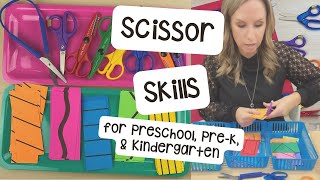
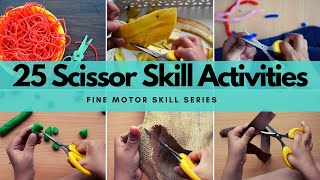
Scissor Skills Printables: A Practical Guide for Parents and Therapists
Developing the ability to cut with scissors is a foundational fine‑motor milestone that supports hand‑eye coordination, bilateral integration, and later academic tasks such as writing and art projects. Printable activities offer a low‑cost, repeatable way to practice these skills at home or in a therapy setting.
Why Printable Worksheets Help
Printable scissor‑skill sheets provide clear outlines, varied line types, and progressive difficulty levels. Because they can be printed multiple times, children can repeat the same pattern until the movement becomes fluid. Repetition builds muscle memory and confidence without the pressure of a one‑time craft.
Foundational Skills Before Cutting
Before introducing scissors, children benefit from activities that strengthen the hand muscles and promote bilateral coordination. Simple tasks such as tearing paper, squeezing play‑dough, or using tweezers to transfer small objects lay the groundwork for controlled scissor use.
- Tearing strips of paper improves grip strength.
- Rolling and flattening play‑dough enhances finger dexterity.
- Using tongs or tweezers to move beads encourages thumb‑index coordination.
These activities are often recommended by occupational therapists, including resources found at support.otmiri.com where video demonstrations illustrate each step.
Stages of Scissor Skill Development
Understanding the typical progression helps adults choose appropriate printables and provide the right amount of support.
Stage 1: Snipping (Ages 2‑3)
Children learn to open and close the scissors while making short, random snips on the edge of a sheet. Printables at this stage feature thick, bold lines with large gaps between cutting targets.
Stage 2: Straight‑Line Cutting (Ages 3‑4)
Once snipping is consistent, the focus shifts to cutting along straight lines. Worksheets include dashed or dotted lines that guide the child’s hand from one point to another.