Similar Triangles Activity
Similar triangles form the backbone of many geometry lessons in high school maths. This activity is designed to help students aged 14 and above—especially those preparing for GCSE Maths—to master the concept of similarity, identify corresponding parts, and solve word problems that involve missing lengths.
What Are Similar Triangles?
Two triangles are similar if their angles are equal and their corresponding sides are in proportion. Because the shape is the same, we can use the ratio of any pair of corresponding sides to find the length of any other side.
- Angle–Angle (AA) Criterion: If two angles of one triangle are congruent to two angles of another triangle, the triangles are similar.
- Side–Side–Side (SSS) Criterion: If the ratios of all three pairs of corresponding sides are equal, the triangles are similar.
- Side–Angle–Side (SAS) Criterion: If two sides are proportional and the included angle is equal, the triangles are similar.
Key Properties to Remember
- Corresponding Angles: Equal.
- Corresponding Sides: Proportional.
- Area Ratio: The ratio of the areas of two similar triangles equals the square of the ratio of their corresponding sides.
- Altitude, Median, Angle Bisector: Each of these segments in one triangle is proportional to the corresponding segment in the other.
Activity Overview
This activity combines visual exploration with word‑problem practice. Students will:
- Identify similar triangles in a diagram.
- Set up proportions to solve for unknown lengths.
- Apply the properties of similarity to solve real‑world problems.
- Reflect on strategies that worked best.
Step‑by‑Step Instructions
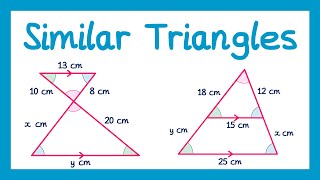
- Choose a Diagram: Start with a simple pair of triangles that share an angle or are placed on a common base. For example, a triangle inscribed in a larger triangle.
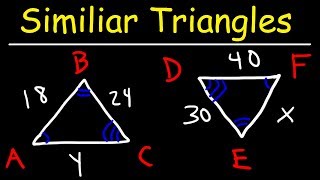
- Label Corresponding Parts: Mark the vertices as A, B, C and A', B', C'. Use different colors if you print the diagram.
- Check Angles: Verify that at least two angles match. If not, adjust the diagram or pick another pair.
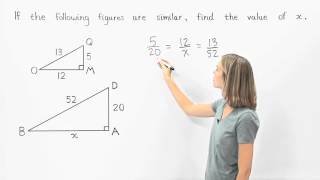
- Write the Proportion: For sides AB and A'B', write AB / A'B' = BC / B'C' = AC / A'C'. This is your key equation.
- Insert Known Lengths: Replace any side that has a given measurement. For example, if AB = 6 cm and A'B' = 4 cm, the ratio is 6/4 = 3/2.
- Solve for Unknowns: Use cross‑multiplication to find missing lengths. If you need AC, set up AC / A'C' = 3/2