Solar Maximum 2025: What to Expect and Why It Matters
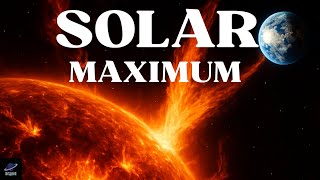
The Sun follows an approximately 11‑year cycle of magnetic activity, ranging from quiet solar minimum to the more turbulent solar maximum. 2025 is poised to be the peak of the current cycle, a period that scientists worldwide are monitoring closely because of its far‑reaching effects on technology, climate, and even human well‑being.
Understanding Solar Maximum
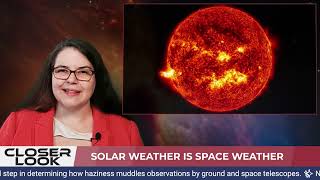
During solar maximum the Sun’s magnetic field becomes highly complex, giving rise to a surge in sunspots, solar flares, and coronal mass ejections (CMEs). These eruptions launch billions of charged particles into space, creating what is known as space weather. In the past, strong space‑weather events have disrupted radio communications, damaged satellites, and induced currents that can overload power grids.
What effect does this heightened activity have on Earth? The answer depends on the intensity of the eruptions and the orientation of the magnetic field they carry. When a CME’s magnetic field aligns opposite to Earth’s, it can reconnect with our planet’s field, opening a pathway for particles to stream into the upper atmosphere.
Predicted Timeline for Solar Maximum 2025
Multiple research groups, along with other experts, predicted that the current solar cycle would peak near the middle of 2025. The prediction is based on a blend of sunspot counts, solar‑magnetic measurements, and computer models that simulate the Sun’s interior dynamics.
Observations and Models
Since early 2023, solar observatories have recorded a steady increase in sunspot numbers. By the time the Earth reaches its closest point to the Sun—known as perihelion—in early January, the Sun’s magnetic field has already shown signs of a major reconfiguration. The Sun’s magnetic field has officially flipped — we have entered the new magnetic polarity phase that typically accompanies the rise toward maximum.
The European Space Agency (ESA) has simulated a range of CME scenarios using its Space Weather Modeling Framework. These simulations help forecast the likelihood of high‑impact events and guide mitigation strategies for satellite operators and power‑grid managers.