Solving Equations Using the Distributive Property
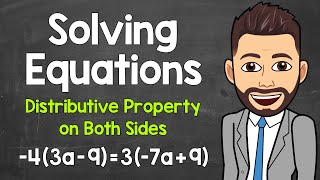
Welcome to a clear and concise guide on how to solve algebraic equations by applying the distributive property. Whether you’re a high‑school student tackling Grade 8 algebra or a lifelong learner brushing up on fundamentals, mastering this technique will streamline your problem‑solving process and deepen your understanding of how equations work.
Why the Distributive Property Matters
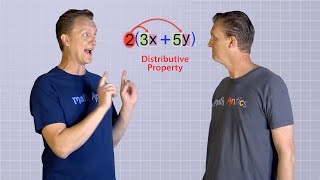
The distributive property states that for any numbers a, b, and c, we have:
a × (b + c) = a × b + a × c
In algebra, this rule allows us to expand expressions that contain parentheses, making it easier to isolate the variable on one side of the equation.
Common Misconceptions
- “I can just drop the parentheses.” – You must distribute before simplifying.
- “The property only works with addition.” – It also applies to subtraction, e.g., a × (b – c) = a × b – a × c.
Step‑by‑Step Guide
- Identify the Parentheses – Locate the group of terms inside parentheses that are multiplied by a number outside the parentheses.
- Apply the Distributive Property – Multiply the outer number by each term inside the parentheses.
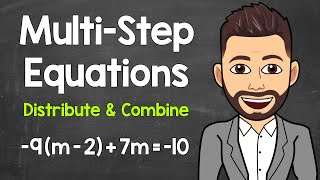
- Simplify – Combine like terms on each side of the equation.
- Isolate the Variable – Use addition, subtraction, multiplication, or division to move all variable terms to one side and constants to the other.
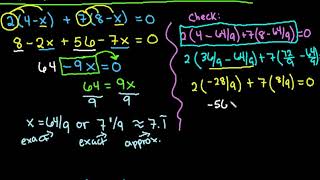
- Check Your Solution – Substitute the variable back into the original equation to confirm it satisfies the equality.
Illustrative Example
Let’s solve the equation:
3 × (x + 4) = 18
1. Identify parentheses: (x + 4) is inside parentheses and is multiplied by 3.
2. Distribute: 3 × x + 3 × 4 = 18
3. Simplify the right side of the distribution: 3x + 12 = 18
4. Isolate the variable:
- Subtract 12 from both sides: 3x = 6
- Divide by 3: x = 2
5. Check: Substitute x = 2 into the original equation: 3 × (2 + 4) = 3 × 6 = 18. The solution is correct.