Syllable Segmenting: A Core Skill for Early Readers
Strong readers build their abilities on a solid foundation of phonological and phonemic awareness. Syllable segmenting—the process of dividing words into their individual syllables—helps children hear, count, and manipulate the sounds that make up spoken language. Research consistently shows that learners who master this skill are better prepared for decoding, spelling, and fluent reading.
Why Syllable Segmenting Matters
Phonemic awareness is a key pre‑reading skill. When children can break a word like butterfly into but‑ter‑fly, they develop an internal map of sound patterns. This map supports:
- Improved decoding speed
- Greater spelling accuracy
- Enhanced vocabulary acquisition
- Increased confidence during independent reading
Studies from the National Reading Panel and subsequent meta‑analyses confirm that explicit instruction in syllable segmentation leads to measurable gains in reading proficiency for kindergarten and first‑grade learners.
How to Teach Syllable Segmenting
Start with Listening
Before writing, ask students to listen for the beats in a word. Clapping or tapping each syllable provides a physical cue that reinforces auditory perception. Simple chants such as “Clap, clap, clap—how many beats?” make the concept tangible.
Use Visual Cues
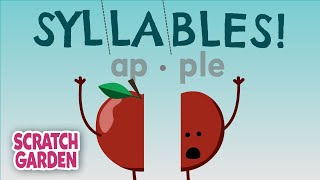
Introduce a dot or dash to represent each syllable on a whiteboard. For example, the word elephant becomes el·e·phant. Visual segmentation helps children see the invisible boundaries they hear.
Practice with Familiar Words
Begin with high‑frequency words that students encounter daily. Children can practice segmenting “apple,” “banana,” and “family.” Repetition builds fluency and reduces the cognitive load of the task.
Incorporate Multisensory Activities
Combine auditory, visual, and kinesthetic elements by having students:
- Say the word aloud.
- Place a token on a mat for each syllable.
- Write the segmented word on a worksheet.
This approach aligns with the principles of the Foundations for Literacy program, which emphasizes multisensory learning to reinforce phonemic concepts.
Classroom Example: Liz Quezada’s Approach
In teacher Liz Quezada’s class, students practice syllable segmenting daily as part of a broader literacy routine. Each morning, the class gathers for a brief Let’s Count session where children count the syllables in a chosen word. Liz uses a large chart with