Tenths Grids: A Visual Tool for Mastering Decimal Concepts
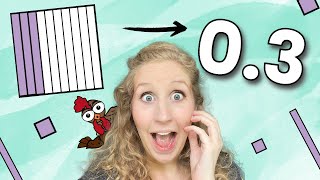
Understanding decimals can be challenging for many students, but tenths grids provide a clear, visual pathway to grasping the place value system. A tenths grid is a rectangular array divided into ten equal columns, each representing one‑tenth of a whole. By shading or marking these columns, learners can see how fractions, decimals, and percentages relate to one another. This article explores the purpose of tenths grids, practical classroom applications, and resources that support effective instruction.
Why Use Tenths Grids in Mathematics Instruction?
Research shows that visual models improve conceptual understanding, especially for abstract ideas like decimals. Tenths grids offer several benefits:
- Concrete representation: Students see a whole split into ten equal parts, reinforcing the meaning of the digit in the tenths place.
- Connection to fractions: Each column corresponds to the fraction 1/10, helping learners transition from fractions to decimal notation.
- Ease of comparison: By shading different numbers of columns, students can quickly compare values such as 0.3, 0.7, and 0.5.
- Foundation for higher place values: Once tenths are mastered, grids can be expanded to hundredths, thousandths, and beyond.
Integrating Tenths Grids with Decimal Models
Many educators combine tenths grids with other decimal models to create a layered learning experience. For example, the “Welcome to Decimal Models” series on Edpuzzle includes a video titled “Hundredths with Mr. J!” that builds on the tenths concept. By first mastering tenths grids, students find it easier to interpret hundredths grids, where each whole is divided into 100 smaller squares.
Step‑by‑Step Classroom Activity
- Introduce a blank tenths grid on the board or as a printable worksheet. Mention that each column equals one‑tenth.
- Ask students to shade 4 columns and write the decimal equivalent (0.4). Emphasize the link to the fraction 4/10.
- Provide real‑world scenarios—such as “four out of ten students prefer chocolate ice cream.” Have learners convert the statement to a decimal using the grid.
- Progress to comparing values: Shade 6 columns for 0.6 and discuss why 0.6 is greater than 0.4.
- Extend the activity by introducing a hundredths grid. Show how each tenths column contains ten hundredths squares, reinforcing the place‑value hierarchy.
Resources for Teaching with Tenths Grids
Effective instruction benefits from quality materials. Below are curated resources that align with the tenths grid approach:
- Find the worksheet for this video here: