The Odyssey Meets Christopher Nolan: Reimagining an Ancient Epic with Athena’s Wisdom
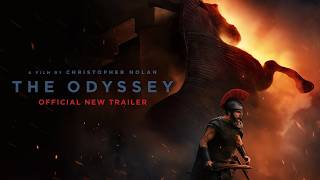
The Odyssey, Homer’s legendary poem of adventure, loss, and homecoming, has inspired countless retellings across literature, theater, and film. In recent months, fans and critics alike have been buzzing about a tantalizing theory: what if Oscar‑winning director Christopher Nolan were to bring this mythic journey to the big screen? Central to the discussion is Athena, the goddess of wisdom who guides Odysseus through perilous seas and treacherous temptations. Below we explore how Nolan’s signature style could intersect with Homer’s narrative, the thematic possibilities of Athena’s role, and why such a project would resonate with modern audiences.
Why Nolan? A Director Known for Complex, Time‑Twisted Storytelling
Christopher Nolan has built a reputation for weaving intricate, non‑linear structures that challenge viewers to think as much as feel. Films like Inception, Interstellar, and Dunkirk demonstrate his fascination with:
- Temporal manipulation – playing with past, present, and future.
- Moral ambiguity – placing characters in ethically gray situations.
- Philosophical underpinnings – probing questions of destiny, free will, and human purpose.
These elements align naturally with the core of The Odyssey, a tale that already bends time (the ten‑year voyage home) and wrestles with fate versus agency. Nolan’s ability to make abstract concepts visceral would allow him to translate Homer’s poetic layers into a cinematic language that feels both epic and intimate.
Athena: The Divine Strategist as Narrative Anchor
In the original poem, Athena appears in disguise, offering counsel, disguising Odysseus, and even intervening directly in battles. Her presence is the thread that ties the hero’s cunning to a higher order of wisdom. A Nolan adaptation could deepen this relationship in several ways:
- Symbolic contrast – Position Athena as the embodiment of rationality against the chaotic forces of the Sirens, the Cyclops, and Poseidon.
- Psychological mirror – Use Athena’s guidance to externalize Odysseus’s internal conflict, turning her interventions into visual metaphors for his own strategic mind.
- Non‑linear dialogue – Present Athena’s advice in fragmented, time‑shifting sequences that echo Nolan’s signature editing style, reinforcing the theme that wisdom often arrives out of order.
By treating Athena not merely as a plot device but as a thematic fulcrum, Nolan could explore the tension between intellect and instinct—a recurring motif in his filmography.
Exploring the Fantastical Elements Through a Nolan Lens
One of the most compelling aspects of The Odyssey is its blend of realistic human struggle with supernatural encounters. Nolan has previously tackled fantastical material while grounding it in scientific or philosophical plausibility (Interstellar’s wormholes, Inception’s dream architecture). Applying this approach, the film could:
- Render the Sirens as a neuro‑acoustic phenomenon that manipulates perception, allowing the audience to experience the lure without resorting to pure CGI.
- Depict the Cyclops Polyphemus as a genetically altered being, tying his monstrous traits to a plausible evolutionary backstory.
- Present the whirlpool Charybdis as a massive, naturally occurring vortex, emphasizing the raw power of nature rather than divine whim.
Such treatment would preserve the mythic awe while satisfying contemporary viewers who expect a degree of realism.
Music, Atmosphere, and the Modern Audience
Sound design will be crucial. Nolan’s collaborations with composer Hans Zimmer have produced scores that act as characters in their own right. A sweeping, minimalist theme could echo the endless sea, while subtle leitmotifs accompany Athena’s appearances, reinforcing her ethereal influence. Additionally, the project could tap into modern platforms: a companion podcast titled “#theodyssey #theodysseymovie” could be released on Spotify, offering behind‑the‑scenes insights, scholarly discussions, and fan theories—an effective way to build a community around the film before its release.
Potential Casting and Production Considerations
While no official casting has been announced, speculative discussions often surface on fan forums. Actors known for both physical presence and intellectual depth—such as Oscar‑winner Mahershala Ali or Oscar‑winner Oscar Isaac—could embody Odysseus’s blend of heroism and cunning. For Athena, a performer capable of conveying both gravitas and subtlety, perhaps an actress like Cate Blanchett or Tilda Swinton, would suit the goddess’s dual nature as mentor and manipulator.
From a production standpoint, Nolan’s preference for practical effects could see the use of large‑scale water tanks, real ship sets, and on‑location shooting in Mediterranean locales, lending authenticity to the seafaring sequences. Combined with cutting‑edge IMAX cameras, the visual experience would be both grand and intimate.
Why This Adaptation Matters Today
In an era saturated with superhero franchises, a thoughtful retelling of The Odyssey would remind audiences of the power of ancient storytelling. The film could serve as a meditation on:
- Resilience – Odysseus’s perseverance mirrors modern challenges of displacement and long‑term uncertainty.
- Leadership – The balance between strategic intellect (Athena) and emotional courage offers a template for contemporary leaders.
- Identity – The hero’s struggle to reclaim his place at home resonates with anyone navigating personal reinvention.
As Nolan himself has said, “People want to go on this journey with us, let’s give them a reason to believe.” A Nolan‑directed Odyssey would provide that belief, merging mythic grandeur with the director’s cerebral storytelling.
Conclusion: A Vision Worth Anticipating
Although no official confirmation exists that Christopher Nolan will helm a film titled The Odyssey, the theoretical convergence of his cinematic language with Homer’s epic offers a fertile ground for speculation. By positioning Athena as the intellectual compass, grounding fantastical elements in plausible design, and leveraging modern distribution channels like Spotify podcasts, such a project could redefine how classic literature is experienced in the 21st century.
Should the collaboration ever move from theory to production, audiences can expect a film that is simultaneously a visual spectacle, a philosophical inquiry, and a heartfelt tribute to one of humanity’s oldest stories of homecoming.
- Keywords: The Odyssey, Christopher Nolan, Athena, film adaptation, mythic storytelling, epic cinema.