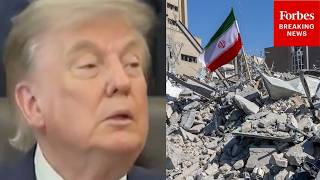
US President Donald Trump Opens Door to Iran Peace Talks by Phone
US President Donald Trump has expressed a willingness to engage in peace talks with Iran via telephone, sparking renewed hopes for a diplomatic resolution to the ongoing conflict.
A Shift in US Foreign Policy?
In an interview Sunday, President Trump hinted at a possible shift in US foreign policy towards Iran, suggesting that negotiations could be conducted over the phone. This statement has generated significant interest and debate, with some analysts seeing it as a potential breakthrough in the stalled talks.
Background to the Conflict
Relations between the US and Iran have been strained for years, particularly since the US withdrawal from the 2015 Joint Comprehensive Plan of Action (JCPOA), also known as the Iran nuclear deal. The US reintroduced sanctions on Iran, which in turn led to a significant escalation of tensions in the region.
The Iranian government has consistently stated its commitment to the JCPOA and has called for the US to return to the agreement. Meanwhile, President Trump has maintained that the deal is flawed and that a new, more robust agreement is needed.
Implications of Phone-Based Talks
The possibility of phone-based talks between the US and Iran has significant implications for the conflict. A telephone conversation could potentially allow for a more informal and flexible exchange of ideas, which could help to break the deadlock in negotiations.
However, it is also possible that phone-based talks could be seen as a low-level, unofficial engagement that lacks the necessary gravity and commitment to achieve a meaningful breakthrough. Some analysts argue that a phone conversation would be a positive step, while others believe it would be a step backward in the negotiations.
As the Situation Stands
As the situation stands, the US and Iran remain far apart on key issues. The US is seeking significant concessions from Iran, including the dismantling of its nuclear program and an end to support for militant groups in the region. In return, Iran is seeking the lifting of US sanctions and a recognition of its sovereignty.
The phone-based talks proposal has been met with a mixed response from Iran. While some officials have welcomed the idea, others have expressed skepticism, arguing that a telephone conversation is not a substitute for formal negotiations.
International Reaction
The international community has been watching the US-Iran situation closely, with many countries calling for a peaceful resolution to the conflict. The European Union, in particular, has been seeking to play a mediating role in the negotiations, urging both sides to engage in meaningful dialogue.
The possibility of phone-based talks has been welcomed by some European officials, who see it as a positive step towards a diplomatic resolution. However, others have expressed concern that the proposal may not be taken seriously by Iran, and that it could undermine the formal negotiations.
Conclusion
The proposal for phone-based talks between the US and Iran is a significant development in the ongoing conflict. While it is unclear what the outcome of such talks would be, it is evident that a telephone conversation could potentially open up new avenues for negotiation and could help to break the deadlock in the talks.
As the situation continues to unfold, it is essential to remain cautious and to avoid jumping to conclusions. The possibility of phone-based talks is a positive development, but it is just one step in a complex and challenging process. Ultimately, a peaceful resolution to the conflict will require a sustained effort from both sides, as well as the support of the international community.
Timeline of Key Events
- 2015: The US and Iran agree to the Joint Comprehensive Plan of Action (JCPOA), also known as the Iran nuclear deal.
- 2018: The US withdraws from the JCPOA and reintroduces sanctions on Iran.
- 2019: Tensions between the US and Iran escalate, with the US killing Iranian military commander Qasem Soleimani in a drone strike.
- 2020: President Trump proposes a new, more robust agreement with Iran, but talks break down.
- 2023