Types Of Sentences Anchor Chart: A Quick Reference for Students and Teachers
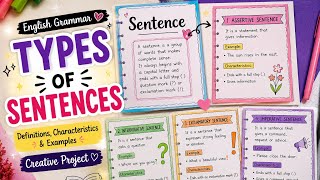
Did you know that every sentence in English falls into one of only four basic categories? Understanding these categories—declarative, interrogative, exclamatory, and imperative—helps students craft clear, engaging writing and gives teachers a simple tool to reinforce grammar concepts. This article explores each type, offers practical examples, and shows how an anchor chart can become a classroom staple.
Why an Anchor Chart Matters
In a grammar and language arts lesson, visual aids like an anchor chart provide instant reference points. Students can quickly spot a sentence type while reading, writing, or editing. The chart can be updated, color‑coded, or paired with an interactive note‑taking video that walks learners through the four sentence structures. By keeping the information front and center, teachers reduce cognitive load and boost confidence.
The Four Essential Types of Sentences
1. Declarative Sentences
Definition: Statements that convey information, facts, or opinions. They end with a period.
- Example: The sky is blue.
- Example: She enjoys reading mystery novels.
Declaratives are the backbone of most prose. They establish context, describe actions, and present arguments.
2. Interrogative Sentences
Definition: Questions that seek information. They end with a question mark.
- Example: What time does the train arrive?
- Example: Why did the plant wilt?
Interrogatives encourage curiosity and engagement. They are essential in conversations, research, and problem‑solving activities.
3. Exclamatory Sentences
Definition: Statements that express strong emotion or surprise. They end with an exclamation point.
- Example: What a beautiful sunset!
- Example: How quickly the time flies!
Exclamations add color to writing, conveying excitement, shock, or admiration. They remind students that language can be expressive, not just informational.
4. Imperative Sentences
Definition: Commands, requests, or instructions. They often omit the subject but can be implied as “you.” They typically end with a period or exclamation point.
- Example: Close the door.
- Example: Please submit your assignment by Friday.
Imperatives guide actions and set