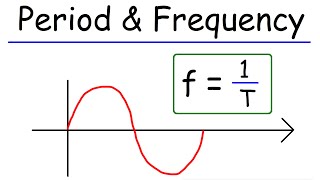
Wave Diagram to Label: A Quick Guide for GCSE Physics
Understanding how to label a wave diagram is a fundamental skill for students tackling the GCSE physics curriculum. Whether you are preparing for an exam or reviewing a tutorial video on longitudinal and transverse waves, a clear, correctly labeled diagram helps you visualise the key concepts and speeds up revision. This article provides an overview of the main features of a wave diagram, shows you how to label it quickly, and points you to useful resources such as the Cognito.org physics tutorials.
Why Labeling Wave Diagrams Matters
Labeling a wave diagram does more than just add text to a picture. It reinforces the relationship between the wave’s shape and the physical quantities it represents. When you can identify the following elements at a glance, you will be able to:
- Distinguish between transverse and longitudinal wave motions.
- Explain the meaning of crest, trough, compression, and rarefaction.
- Calculate wave speed using the formula v = fλ (where v is speed, f frequency, and λ wavelength).
Quick Steps to Label a Wave Diagram
- Identify the wave type. Look at the direction of particle motion relative to the direction of wave travel. If particles move up and down while the wave travels horizontally, you have a transverse wave. If particles move back and forth along the direction of travel, it is longitudinal.
- Mark the key points. For a transverse wave, label the highest points as crests and the lowest points as troughs. For a longitudinal wave, label the regions of high particle density as compressions and the low‑density regions as rarefactions.
- Draw the wavelength. Measure the distance between two successive identical points (e.g., crest to crest or compression to compression) and label this distance as λ.
- Indicate the amplitude. Draw a vertical line from the equilibrium position to a crest (or to a compression) and label it A. This represents the maximum displacement of particles.
- Add the direction of propagation. Use an arrow to show the direction in which the wave travels. This is especially helpful when comparing transverse and longitudinal diagrams side by side.
Features to Include in a Complete Diagram
A well‑labeled wave diagram should contain the following elements, each clearly identified with a short, legible label:
- Wave type (Transverse or Longitudinal)
- Crest, trough, compression, and rarefaction
- Wavelength (λ)
- Amplitude (A)
- Propagation direction arrow
- Frequency (f) – optional, often shown as a number next to the diagram