Understanding Word Lists With Prefixes
Prefixes are tiny word parts that change the meaning of a base word, and they are essential tools for expanding vocabulary quickly. Whether you are a student, a language teacher, or an avid reader, having a word list with prefixes at hand can make learning new words feel like building blocks rather than memorizing isolated terms.
Why Use a Prefix List?
Creating a dedicated list helps you:
- Identify patterns in unfamiliar words.
- Guess meanings without consulting a dictionary.
- Improve spelling and pronunciation.
- Boost confidence when you encounter academic or technical texts.
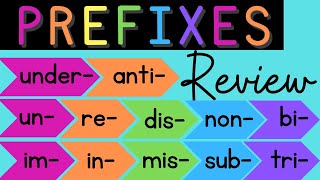
In a typical English class, teachers often ask students to practice 12 common prefixes before moving on to more complex material. This focused approach makes it easier to build new vocabulary efficiently.
How to Choose the Right Prefixes for Your List
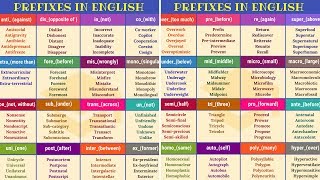
Start with the most frequently used prefixes. Below is a practical selection that covers everyday, academic, and professional contexts.
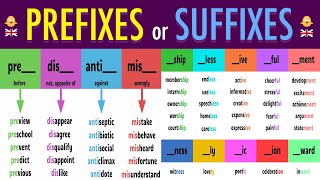
- un- (not, opposite) – e.g., unhappy, unclear
- re- (again) – e.g., rewrite, revisit
- in- / im- / il- / ir- (not, into) – e.g., inactive, immerse, illegal, irregular
- dis- (apart, opposite) – e.g., disagree, disconnect
- pre- (before) – e.g., preview, preheat
- post- (after) – e.g., postpone, postwar
- sub- (under, below) – e.g., submarine, subconscious
- inter- (between) – e.g., international, interact
- over- (excessive) – e.g., overwork, overestimate
- mis- (wrongly) – e.g., misplace, misinterpret